What is Zaseki: a virtual office built for Japanese hybrid teams
No game UI, no always-on audio. Zaseki is a presence-first virtual office that Japanese hybrid teams can realistically use every day.
Remote and hybrid work has been the norm for a few years now, but a specific kind of friction never really got solved: knowing who’s around and being able to reach them without it becoming a whole process.
In a physical office, you look up from your desk, see who’s there, and walk over. In a hybrid setup, that same thing becomes: send a message, wait for a response, schedule a call, share a link. The spontaneous tap-on-the-shoulder disappeared and nobody quite replaced it.

The tools that exist aren’t quite right for Japanese teams
Virtual office tools have tried to solve this. Most of them introduce their own problems.
Game-style maps with walking avatars get rejected fast in Japanese workplaces. Managers see it and immediately say it looks unprofessional. Always-on audio means wearing headphones all day just to signal that you’re present, which creates a kind of fatigue that kills adoption within weeks. Heavy desktop clients don’t run well on the standard office PC.
Teams that tried oVice and quietly stopped logging in, or tried Gather.Town and heard “this feels like a game” from their staff: that’s not an unusual story.
What Zaseki is
Zaseki (座席, meaning “seat” or “seating position”) is a browser-based virtual office built specifically for this gap.
The core idea is simple: a seating chart that lives in your browser.
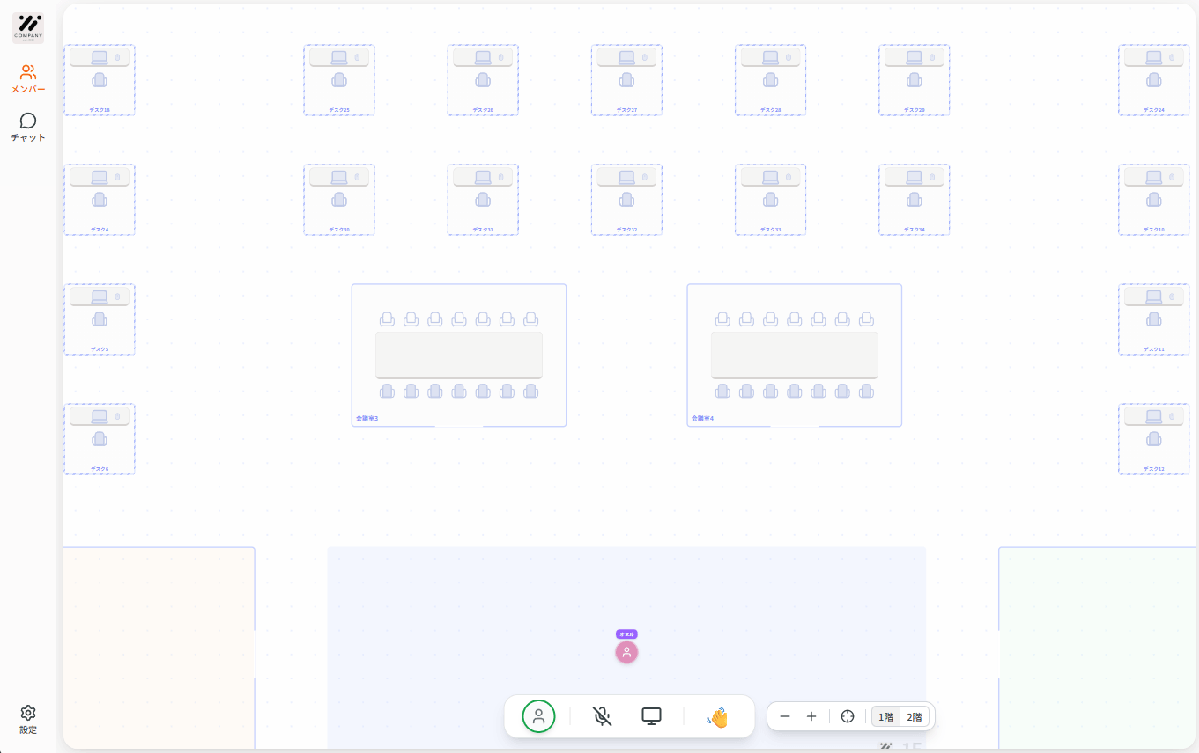
When you log in, your seat lights up. Your team can see who’s online, what their status is, and which room they’re in. That’s it. Your microphone doesn’t connect. You don’t need headphones, and there is no default webcam workflow for everyday presence; showing up means the floor plan and your status, not live video tiles.
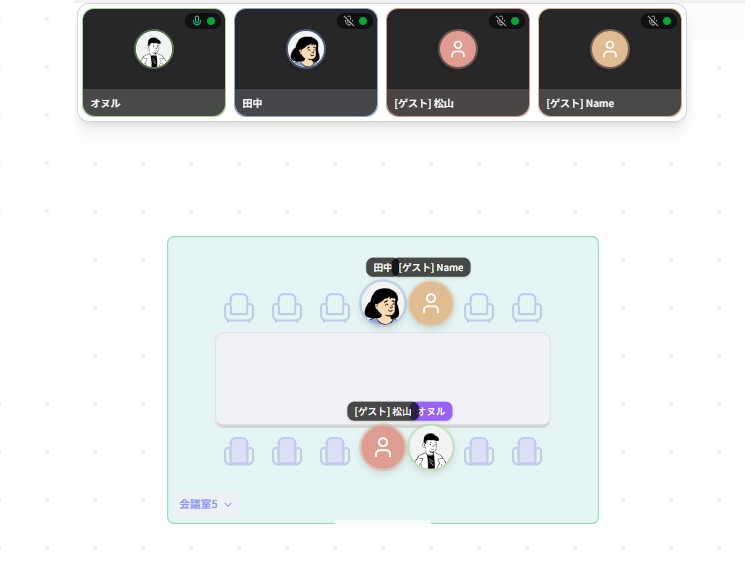
When you want to talk to someone, you click their tile or enter a meeting room. Only then does audio connect. Voice is on-demand, not a default.
Presence and audio are completely separate in Zaseki’s architecture. That single design decision removes most of the friction that kills adoption in other tools.
Who it’s for
Zaseki targets Japanese SMEs with 5 to 50 people doing hybrid or partial-remote work. Creative agencies, IT companies, consulting firms, accounting offices, and startups that have expanded hiring to remote workers outside their city.

The 2025 amendment to Japan’s childcare and caregiver leave law now requires companies to offer telework options for employees with children under age 3. A lot of companies that never had formal remote work infrastructure are now setting it up quickly. Zaseki is designed to be the lightweight starting point for exactly that situation.
What it does
- Real-time floor plan showing who’s at their desk and what they’re doing
- Status options: available, focus, away, lunch, at office
- Enter a meeting room and audio connects automatically with everyone in it
- “Sumimasen” ping: a lightweight shoulder-tap notification to get someone’s attention
- Screen sharing inside any active voice session
- Persistent channel and DM chat within a space
- Clock-in/out log with CSV export for telework documentation (出退勤ログ)
- Stripe-based subscription billing, monthly or annual
Pricing
Up to 4 people can start with a 14-day full-feature trial (no credit card required). After the trial, you’ll need to choose a paid plan. See the pricing page for terms and options.
The intent is for small teams to try it for real before committing, not to lock anyone into a demo environment with fake data.
More at zaseki.cloud.